
Geomembrane
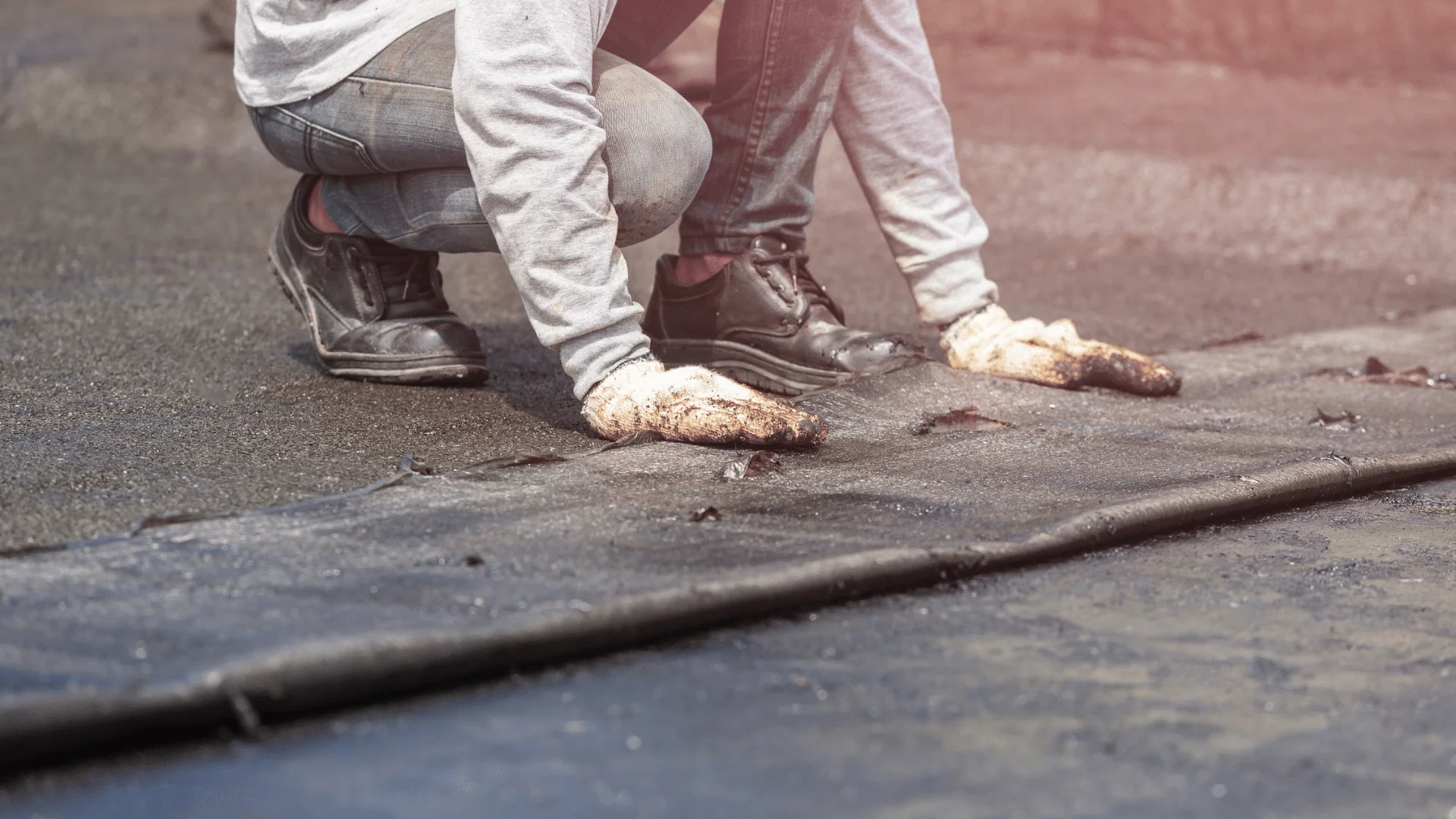
Indonesian Plastic Manufacturer and Exporter specializes in producing high quality geomembranes from premium High-Density Polyethylene (HDPE) Liners. We provide local geomembrane from Indonesia, also geomembrane from America/Canada, Solmax brand and geomembrane from China. This geomembrane is available in various thicknesses, varying from 0.3 mm to 3.00 mm, to meet various industrial needs. Geomembranes have several key advantages: they are highly resistant to ultraviolet light, chemicals and microorganisms, thus ensuring long-term durability and performance. In addition, this product is made exclusively from 100% non-recycled materials, ensuring its strength and flexibility. These characteristics make geomembranes well suited for a variety of applications, including storage of toxic and liquid waste, as well as lining and covering landfills.


TDS Local Geomembrane
| Properties | Test Method | Test Value | |||||
|---|---|---|---|---|---|---|---|
| 0.750 mm | 1.00 mm | 1.50 mm | 2.00 mm | 2.50 mm | 3.00 mm | ||
| Thickness (min.ave.) Tolerance | ASTM D 5199 | 0.75 (±10%) mm | 1.0 (±10%) mm | 1.5 (±10%) mm | 2.0 (±10%) mm | 2.5 (±10%) mm | 3.0 (±10%) mm |
| Formulated Density (min.) | ASTM D 792 | ≥ 0.940 gr/cm³ | ≥ 0.940 gr/cm³ | ≥ 0.940 gr/cm³ | ≥ 0.940 gr/cm³ | ≥ 0.940 gr/cm³ | ≥ 0.940 gr/cm³ |
| Tensile Properties (min.ave.) | ASTM D 6693 Type IV | ||||||
| - Yield Strength | 50 mm/min | 11 kN/m | 15 kN/m | 22 kN/m | 29 kN/m | 37 kN/m | 44 kN/m |
| - Break Strength | 50 mm/min | 22 kN/m | 29 kN/m | 42 kN/m | 55 kN/m | 69 kN/m | 82 kN/m |
| - Yield Elongation | lo = 33 mm | 12 % | 12 % | 12 % | 12 % | 12 % | 12 % |
| - Break Elongation | lo = 50 mm | 700 % | 700 % | 700 % | 700 % | 700 % | 700 % |
| Tear Resistance (min.ave.) | ASTM D 1004 | 107 N | 139 N | 201 N | 263 N | 325 N | 388 N |
| Puncture Resistance (min.ave.) | ASTM D 4833 | 263 N | 352 N | 530 N | 670 N | 840 N | 975 N |
| Stress Crack Resistance (min.) | ASTM D 5397 | 500 hrs. | 500 hrs. | 500 hrs. | 500 hrs. | 500 hrs. | 500 hrs. |
| Carbon Black Content | ASTM D 4218 | 2 - 3 % | 2 - 3 % | 2 - 3 % | 2 - 3 % | 2 - 3 % | 2 - 3 % |
| Carbon Black Dispersion | ASTM D 5596 | 9 in categories 1 or 2; 1 in category 3 | 9 in categories 1 or 2; 1 in category 3 | 9 in categories 1 or 2; 1 in category 3 | 9 in categories 1 or 2; 1 in category 3 | 9 in categories 1 or 2; 1 in category 3 | 9 in categories 1 or 2; 1 in category 3 |
| Standard Oxidative Induction Time (min.ave.) | ASTM D 3895 | 105 min. | 105 min. | 105 min. | 105 min. | 105 min. | 105 min. |
| Color & Surface | - | Black Smooth | Black Smooth | Black Smooth | Black Smooth | Black Smooth | Black Smooth |
| TYPICAL ROLL DIMENSIONS | |||||||
| Roll Length (1) | 100 m | 210 m | 140 m | 105 m | 84 m | 40 m | |
| Roll Width (1) | 7 m | 7 m | 7 m | 7 m | 7 m | 6 m | |
| Roll Area | 700 m² | 1470 m² | 980 m² | 735 m² | 588 m² | 240 m² | |
| Local Geomembrane (mm) | Local Geomembrane (mikron) | Size (roll) |
|---|---|---|
| 0,3 | 300 | 6 x 50 m |
| 0,5 | 500 | 6 x 50 m |
| 0,75 | 750 | 7 x 100 m |
| 0,75 | 750 | 7 x 50 m |
| 1,0 | 1000 | 7 x 210 m |
| 1,0 | 1000 | 7 x 100 m |
| 1,0 | 1000 | 7 x 50 m |
| 1,5 | 1500 | 7 x 140 m |
| 1,5 | 1500 | 7 x 100 m |
| 1,5 | 1500 | 7 x 50 m |
| 2,0 | 2000 | 7 x 10⁵ m |
| 2,5 | 2500 | 7 x 85 m |
Solmax – America/Canada Imported Geomembrane
| Tested property | Test Method | Frequency | Unit | 0.75 mm | 1.00 mm | 1.50 mm | 2.00 mm | 2.50 mm | 3.00 mm |
|---|---|---|---|---|---|---|---|---|---|
| Nominal Thickness (min ) | ASTM D5199 | Every rolls | mm | 0.68 | 0.9 | 1.35 | 1.80 | 2.25 | 2.70 |
| Resin Density | ASTM D1505 | 1/Batch | g/cc | > 0.932 | > 0.932 | > 0.932 | > 0.932 | > 0.932 | > 0.932 |
| Melt index - J 90/2.J6 (max.) | ASTM D1238 | 1/Batch | g/10 min | 1.0 | 1.0 | 1.0 | 1.0 | 1.0 | 1.0 |
| Geomembrane Density | ASTM D792 | Every 10 rolls | g/cc | ≥ 0.940 | ≥ 0.940 | ≥ 0.940 | ≥ 0.940 | ≥ 0.940 | ≥ 0.940 |
| Carbon Black Content | ASTM D4218 | Every 2 rolls | % | 2.0 - 3.0 | 2.0 - 3.0 | 2.0 - 3.0 | 2.0 - 3.0 | 2.0 - 3.0 | 2.0 - 3.0 |
| Carbon Black Dispersion | ASTM D5596 | Every 10 rolls | Category | Cat.1 / Cat.2 | Cat.1 / Cat.2 | Cat.1 / Cat.2 | Cat.1 / Cat.2 | Cat.1 / Cat.2 | Cat.1 / Cat.2 |
| OIT - standard (avg.) | ASTM D3895 | 1/Batch | min | 100 | 100 | 100 | 100 | 100 | 100 |
|
Tensile Properties (min. avg) (2)
Strength at Yield Elongation at Yield Strength at Break Elongation Break | ASTM D6693 | Every 2 rolls | kN/m | 11 | 15 | 22 | 29 | 39 | 46 |
| % | 13 | 13 | 13 | 13 | 13 | 13 | |||
| kN/m | 21 | 27 | 40 | 53 | 71 | 85 | |||
| % | 700 | 700 | 700 | 700 | 700 | 700 | |||
| Tear Resistance (min. avg.) | ASTM D1004 | Every 5 rolls | N | 93 | 125 | 187 | 249 | 311 | 375 |
| Puncture Resistance (min. avg.) | ASTM D4833 | Every 5 rolls | N | 263 | 320 | 480 | 640 | 800 | 960 |
| Dimensional Stability | ASTM D1204 | Certified | % | ||||||
| Stress Crack Resistance (SP-NCTL) | ASTM D5397 | 1/Batch | hr | 500 | 500 | 500 | 500 | 500 | 500 |
| Oven Aging - % retained after 90 days | ASTM D5721 | Per formulation | |||||||
| STD OIT (min. avg.) (3) | ASTM D3895 | % | 55 | 55 | 55 | 55 | 55 | 55 | |
| HP OIT (min. avg.) (3) | ASTM D5885 | % | 80 | 80 | 80 | 80 | 80 | 80 | |
| UV Rest.- % Retained after 1600 hr | ASTM D7238 | Per formulation | |||||||
| HP OIT (min. avg.) | ASTM D5885 | % | 50 | 50 | 50 | 50 | 50 | 50 | |
| Low Temperature Brittleness | ASTM D746 | Certified | °C | -77 | -77 | -77 | -77 | -77 | -77 |
| SUPPLY SPECIFICATION (Roll dimension may vary ± 1%) | |||||||||
| Roll Dimension - Width | m | 7.00 | 7.00 | 7.00 | 7.00 | 7.00 | 7.00 | ||
| Roll Dimension - Length | m | 280 | 210.0 | 140.0 | 105 | 85 | 70 | ||
| Area (surface/Roll) | m² | 19600.00 | 14700.00 | 9800.00 | 735.00 | 595.00 | 490.00 | ||
| Geomembran Solmax (mm) | Geomembran Solmax (mikron) | Ukuran (roll) |
|---|---|---|
| 0,75 | 750 | 7m x 280m |
| 1,0 | 1000 | 7m x 210m |
| 1,5 | 1500 | 7m x 140m |
| 2,0 | 2000 | 7m x 105m |
China Imported Geomembrane
| Tested Property | Test Method | Unit | 0.30 mm | 0.50 mm |
|---|---|---|---|---|
| Nominal Thickness (min.) | ASTM D5199 | mm | 0.3 | 0.5 |
| Geomembrane Density | ASTM D792 | g/cc | ≥ 0.940 | ≥ 0.940 |
| Carbon Black Content | ASTM D4218 | % | 2.0 - 3.0 | 2.0 - 3.0 |
| Carbon Black Dispersion | ASTM D5596 | Category | Cat. 1 / Cat. 2 | Cat. 1 / Cat. 2 |
|
Tensile Properties (min. avg) (2)
Strength at Yield Elongation at Yield Strength at Break Elongation at Break | ASTM D6693 | kN/m | 4.5 | ≥ 7 |
| % | 12 | ≥ 12 | ||
| kN/m | 8 | ≥ 13 | ||
| % | 700 | ≥ 700 | ||
| Tear Resistance (min. avg.) | ASTM D1004 | N | 37.4 | 62 |
| Puncture Resistance (min. avg.) | ASTM D4833 | N | 120 | ≥ 235 |
| Stress Crack Resistance (SP-NCTL) | ASTM D5397 | hr | 300 | ≥ 500 |
| Properties | Test Method | Test Value | Testing Frequency | ||||||
|---|---|---|---|---|---|---|---|---|---|
| 0.75 mm | 1.00 mm | 1.25 mm | 1.50 mm | 2.00 mm | 2.50 mm | 3.00 mm | |||
|
Thickness - mils (min. ave.) • lowest individual of 10 values | D5199 | nom (mil) -10% | nom (mil) -10% | nom (mil) -10% | nom (mil) -10% | nom (mil) -10% | nom (mil) -10% | nom (mil) -10% | per roll |
| Density (min.) | D1505 / D792 | 0.940 g/cc | 0.940 g/cc | 0.940 g/cc | 0.940 g/cc | 0.940 g/cc | 0.940 g/cc | 0.940 g/cc | 90,000 kg |
Tensile Properties (1) (min. ave.)
| D6693 Type IV | 11 kN/m 20 kN/m 12% 700% | 15 kN/m 27 kN/m 12% 700% | 18 kN/m 33 kN/m 12% 700% | 22 kN/m 40 kN/m 12% 700% | 29 kN/m 53 kN/m 12% 700% | 37 kN/m 67 kN/m 12% 700% | 44 kN/m 80 kN/m 12% 700% | 9,000 kg |
| Tear Resistance (min. ave.) | D1004 | 93 N | 125 N | 156 N | 187 N | 249 N | 311 N | 374 N | 20,000 kg |
| Puncture Resistance (min. ave.) | D4833 | 240 N | 320 N | 400 N | 480 N | 640 N | 800 N | 960 N | 20,000 kg |
| Stress Crack Resistance (2) | D5397 (App.) | 300 hr | 300 hr | 300 hr | 300 hr | 300 hr | 300 hr | 300 hr | per GRI GM-10 |
| Carbon Black Content - % | D1603 (3) | 2.0-3.0% | 2.0-3.0% | 2.0-3.0% | 2.0-3.0% | 2.0-3.0% | 2.0-3.0% | 2.0-3.0% | 9,000 kg |
| Carbon Black Dispersion | D5596 | note (4) | note (4) | note (4) | note (4) | note (4) | note (4) | note (4) | 20,000 kg |
|
Oxidative Induction Time (OIT) (min. ave.) (5) (a) Standard OIT — or — | D3895 | 100 min | 100 min | 100 min | 100 min | 100 min | 100 min | 100 min | 90,000 kg |
| (b) High Pressure OIT | D5885 | 400 min | 400 min | 400 min | 400 min | 400 min | 400 min | 400 min | |
| Oven Aging at 85°C (5), (6) | D5721 | ||||||||
|
(a) Standard OIT (min. ave.) - % retained after 90 days — or — | D3895 | 55% | 55% | 55% | 55% | 55% | 55% | 55% | per each formulation |
| (b) High Pressure OIT (min. ave.) - % retained after 90 days | D5885 | 80% | 80% | 80% | 80% | 80% | 80% | 80% | |
| UV Resistance (7) | |||||||||
|
(a) Standard OIT (min. ave.) — or — | D3895 | N.R. (8) | N.R. (8) | N.R. (8) | N.R. (8) | N.R. (8) | N.R. (8) | N.R. (8) | per each formulation |
| (b) High Pressure OIT (min. ave.) - % retained after 1600 hrs (9) | D5885 | 50% | 50% | 50% | 50% | 50% | 50% | 50% | |
- Machine direction (MD) and cross machine direction (XMD) average values should be on the basis of 5 test specimens each direction. Yield elongation is calculated using a gage length of 33 mm. Break elongation is calculated using a gage length of 50 mm.
- The yield stress used to calculate the applied load for the SP-NCTL test should be the manufacturer’s mean value via MQC testing.
- Other methods such as D 4218 (muffle furnace) or microwave methods are acceptable if an appropriate correlation to D 1603 (tube furnace) can be established.
- Carbon black dispersion (only near spherical agglomerates) for 10 different views: 9 in Categories 1 or 2 and 1 in Category 3.
- The manufacturer has the option to select either one of the OIT methods listed to evaluate the antioxidant content in the geomembrane.
- It is also recommended to evaluate samples at 30 and 60 days to compare with the 90 day response.
- The condition of the test should be 20 hr. UV cycle at 75°C followed by 4 hr. condensation at 60°C.
- Not recommended since the high temperature value of the Std.-OIT test produces an unrealistic result for some of the antioxidants in the UV exposed samples.
- UV resistance is based on percent retained value regardless of the original HP-OIT value.
| Geomembran Import China (mm) | Geomembran Import China (mikron) | Ukuran (roll) |
|---|---|---|
| 0,3 | 300 | 5.8m x 100m |
| 0,3 | 300 | 8m x 50m |
| 0,5 | 500 | 6m x 50m |
| 0,75 | 750 | 7m x 100m |
| 1,0 | 1000 | 7m x 100m |
| 1,0 | 1000 | 7m x 210m |
| 1,5 | 1500 | 7m x 140m |
| 1,5 | 1500 | 7m x 105m |
FAQ About Geomembrane
What is the life expectancy of a geomembrane liner?
The life expectancy of a geomembrane liner largely depends on various factors such as the material quality, environmental conditions, exposure to sunlight and chemicals, and the thickness of the geomembrane. Generally, high-quality geomembranes can last anywhere from 10 to 50 years. However, under optimal conditions and with proper installation and maintenance, some geomembrane liners can last even longer. The specific type of geomembrane (e.g., HDPE, PVC, EPDM) also plays a significant role in determining its durability and longevity. Regular inspection and maintenance can significantly extend the life of a geomembrane liner.
What is HDPE geomembrane?
HDPE geomembrane is a type of plastic liner made from high-density polyethylene, widely used for its durability and chemical resistance. It’s a popular choice for applications such as landfill liners, pond liners, and in mining and water containment, due to its impermeability and resistance to a variety of solvents. HDPE geomembranes are known for their strength, flexibility, and ability to withstand harsh environmental conditions. They are also UV resistant and can handle temperature fluctuations. These characteristics make HDPE geomembranes a reliable solution for long-term containment and environmental protection projects.
What is geomembrane used for?
Geomembranes are used extensively for environmental protection and containment purposes. Their primary applications include lining landfills to prevent leachate from contaminating groundwater, lining ponds, lakes, and reservoirs to prevent water loss, and in mining operations to contain hazardous materials. They’re also used in water treatment facilities, for canal linings, and in aquaculture to create controlled environments. Geomembranes are effective for secondary containment systems, like under fuel storage tanks, to prevent spills. Their impermeability, durability, and resistance to various chemicals and environmental conditions make them essential in construction and environmental management projects.
What are the three types of geomembrane?
The three main types of geomembranes are High-Density Polyethylene (HDPE), Low-Density Polyethylene (LDPE), and Polyvinyl Chloride (PVC). HDPE geomembranes are known for their high strength, chemical resistance, and durability, making them ideal for applications in harsh environments. LDPE geomembranes, being more flexible and malleable, are suited for projects requiring tighter seals and where flexibility is a key factor. PVC geomembranes, on the other hand, offer a balance between flexibility and strength and are commonly used in water containment applications due to their resistance to UV light and low permeability to gases and liquids.
What is difference between geotextile and geomembrane?
Geotextiles and geomembranes differ significantly in their functions and materials. Geotextiles, made from woven or non-woven fabrics like polypropylene or polyester, are permeable and used for soil reinforcement, filtration, separation, and drainage. They allow water to pass through while stabilizing soil. Geomembranes, on the other hand, are impermeable liners made from materials like HDPE, LDPE, PVC, or rubber. Their main purpose is containment, used to prevent fluid migration in applications like landfill liners, pond linings, and hazardous material containment, ensuring environmental protection by blocking liquids and gases.
What is geomembrane made of?
Geomembranes are typically made from synthetic materials such as High-Density Polyethylene (HDPE), Low-Density Polyethylene (LDPE), Polyvinyl Chloride (PVC), Ethylene Propylene Diene Monomer (EPDM) rubber, and Polypropylene (PP). Each material offers unique properties: HDPE provides excellent chemical resistance and strength, LDPE offers more flexibility, PVC is known for its durability and is easy to weld, EPDM rubber is highly flexible and UV resistant, and PP combines chemical resistance with mechanical strength. These materials are chosen for their impermeability and resistance to a variety of environmental conditions, making them suitable for diverse containment applications.
What is geomembrane used in road construction?
In road construction, geomembranes serve several crucial functions. They are primarily used as barrier layers to prevent water infiltration into the road base, which can cause damage and reduce the road’s lifespan. This waterproofing helps maintain the structural integrity of the road by preventing the weakening of the foundation layers. Geomembranes are also used in the construction of subgrade barriers to separate different soil layers and stabilize the ground, especially in areas with weak or unstable soil. Additionally, they can be used in controlling erosion and managing drainage around roadways, ensuring long-term durability and safety of the road infrastructure.
Is geomembrane waterproof?
Yes, geomembranes are designed to be waterproof. They are made from synthetic materials like HDPE, PVC, or EPDM, which provide a highly effective barrier against water and moisture. Geomembranes are commonly used in applications such as lining ponds, canals, and landfills, as well as for environmental containment solutions to prevent contamination of soil and water. Their waterproof nature makes them ideal for these applications, ensuring that water and other liquids are effectively contained or prevented from seeping into unwanted areas. However, the waterproof effectiveness of a geomembrane also depends on its quality, installation, and maintenance.
How thick is a geomembrane liner?
The thickness of geomembrane liners varies depending on the application and material used. Common thicknesses range from 0.75 millimeters to 3.0 millimeters. Thinner geomembranes (around 0.75 to 1.0 mm) are often used for applications requiring more flexibility, such as in small ponds or secondary containment. Thicker geomembranes, typically 1.5 to 3.0 mm, are preferred for more demanding applications like landfills, hazardous waste containment, and large water reservoirs, where greater strength and durability are required. The choice of thickness is a critical decision based on factors like environmental conditions, mechanical requirements, and expected lifespan of the project.
What is the most important aspect of construction with geomembranes?
The most important aspect of construction with geomembranes is ensuring proper installation and seam integrity. Correct installation is crucial for maximizing the effectiveness and lifespan of the geomembrane. This involves careful preparation of the substrate to eliminate sharp objects that might puncture the liner, precise placement, and minimizing wrinkles. Seam integrity is critical; seams must be properly welded and tested to ensure they are watertight and durable. Poorly constructed seams can lead to leaks, compromising the geomembrane’s purpose. Additionally, selecting the right type of geomembrane material for the specific environmental conditions and application is key to the project’s success.